GETTING STARTED
Do I need any self-defense experience?
No. You don't need any previous self-defense experience to participate. We'll introduce skills progressively, with time to ask questions, practice, and become familiar with the movements and concepts.
How do I get started?
You can book an individual private lesson directly online. If you're interested in arranging a group experience, use the group inquiry form.
If you're not sure which option is right for you, feel free to reach out. I'm happy to help you figure out where to begin.
Who are private lessons for?
Private lessons are for girls and women ages 12 and up. Lessons are adapted to your goals, experience, and physical abilities, with room to work at your own pace.
TRAINING OPTIONS
What's the difference between Women's Strength Collective and private self-defense lessons?
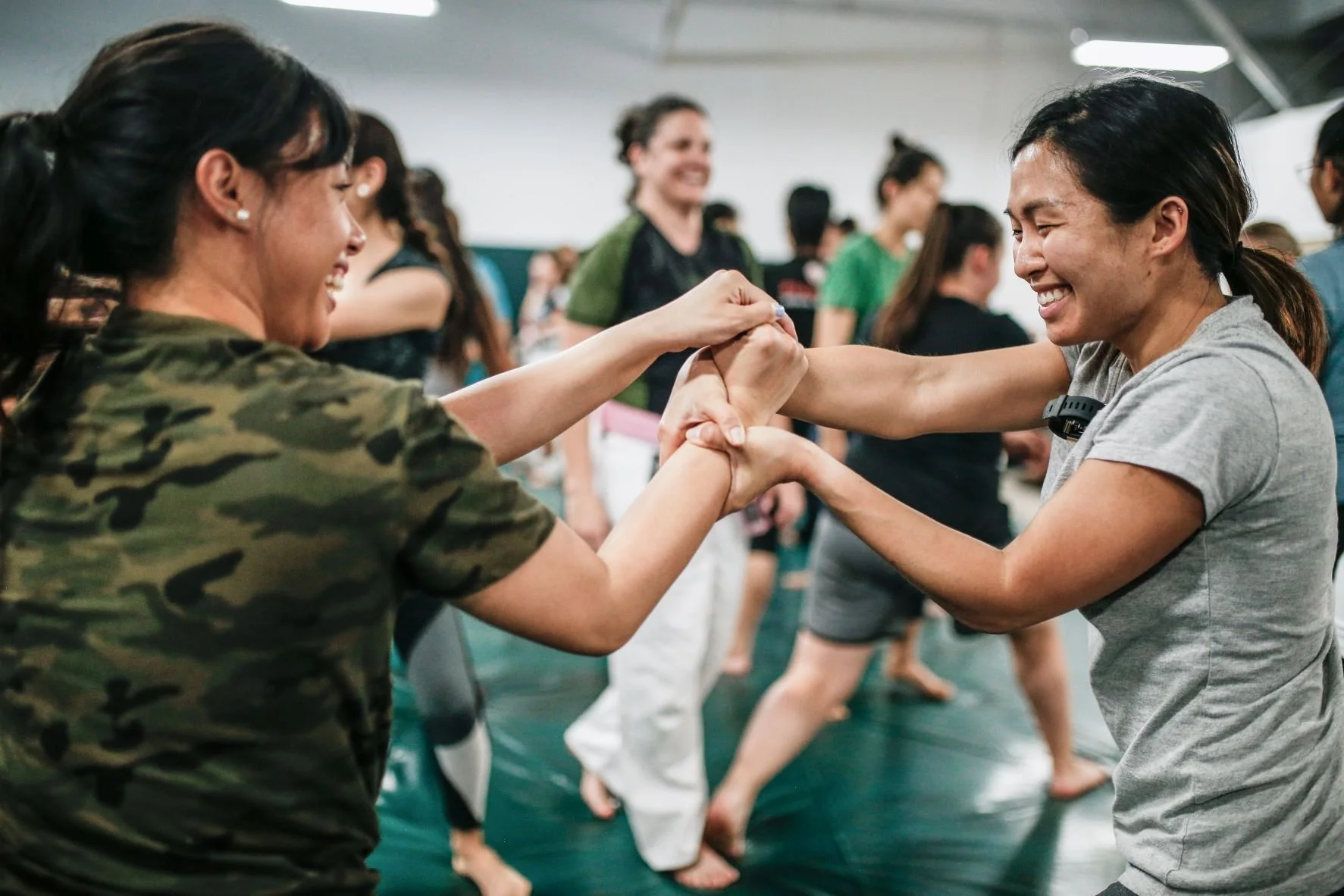
Women's Strength Collective is a weekly group class that combines strength, movement, and practical self-defense skills. You can drop in whenever you're able, without a weekly commitment.
Private lessons offer a more individualized experience. You can work one-on-one or arrange a group lesson, and shape the number of sessions and topics around your interests and goals.
Can I train with a friend, family member, or group?
Absolutely. Group lessons can be arranged for two or more people. They can be a good fit for friends, mother-daughter pairs, families, homeschool groups, teams, organizations, and other communities.
You can build an experience around your group, with sessions ranging from 60 minutes to three hours. Use the group inquiry form to get started.
How many private sessions should I plan to take?
A few introductory sessions can help you become familiar with the basic movements and concepts. Packages of four or eight sessions offer more time to develop skills and explore a broader range of situations.
Longer training can include a fuller curriculum, more challenging physical practice, and a final assessment of the skills you've developed.
There's no single right number. It depends on what you'd like to learn, how deeply you'd like to explore it, and how much time you'd like to spend practicing.
ABOUT TRAINING
Where do the self-defense skills come from?
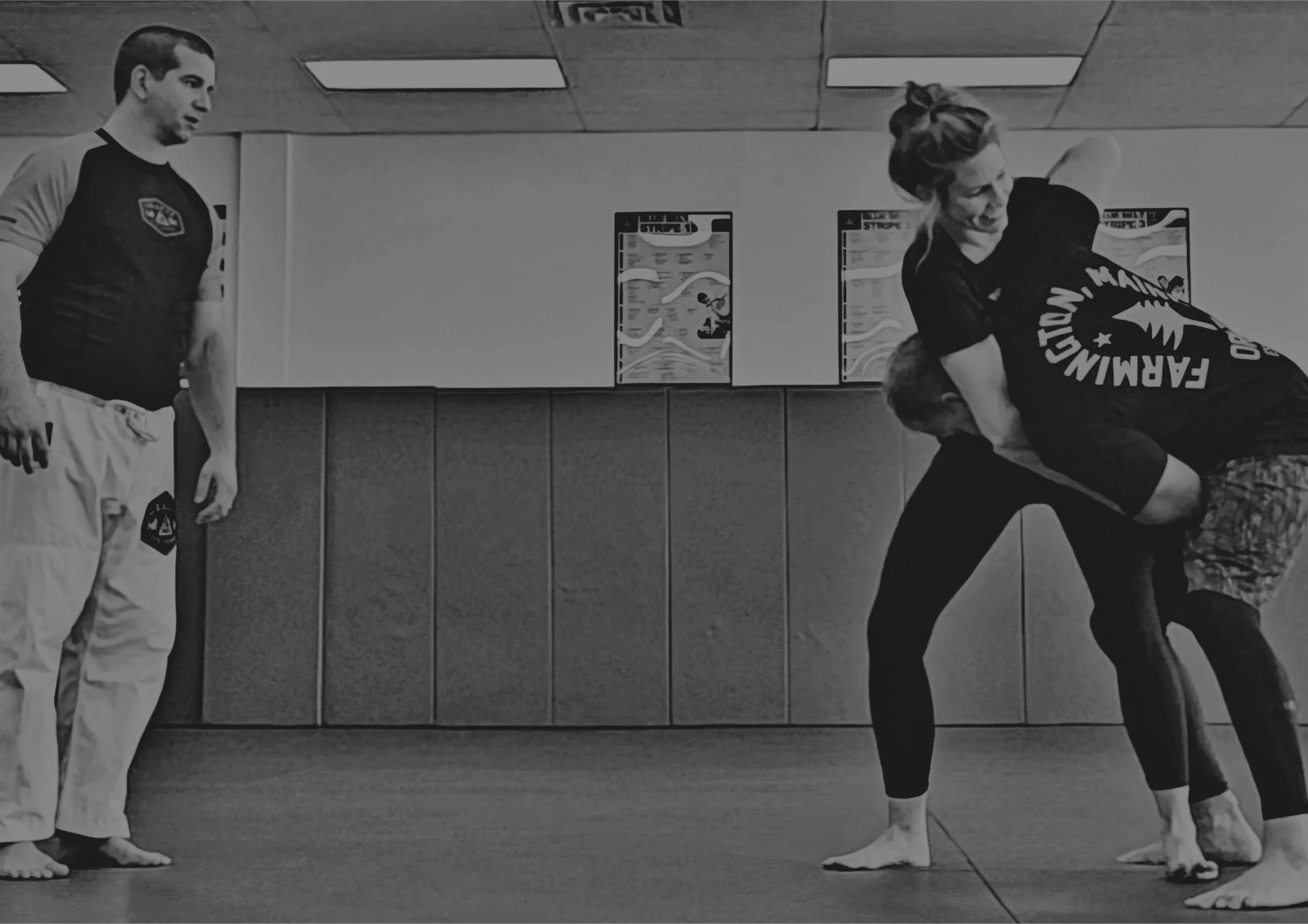
The physical skills draw on principles from Jiu-Jitsu, adapted to address common threats women may encounter. We explore movement, positioning, leverage, awareness, and practical ways to respond.
The goal isn't to rely on athleticism or memorize a long list of techniques. It's to develop familiarity with your body, understand how movement works, and practice skills that can be adapted to different situations.
What will we practice?
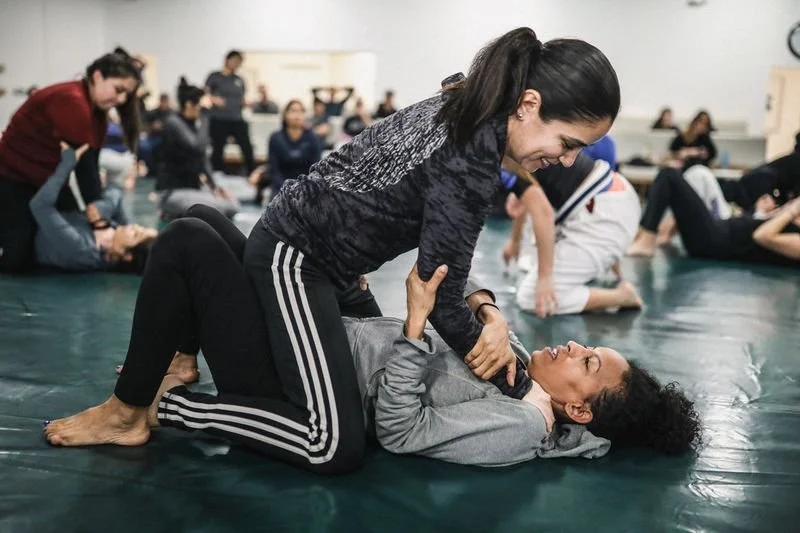
Depending on your training format and goals, practice may include responding to approaches and intrusions, grabs, chokes, hair pulls, strikes, dominant positions, and dangerous objects or weapons.
We'll work with movement, positioning, awareness, and practical responses. The emphasis isn't on memorizing techniques as isolated steps, but on understanding and practicing ways to respond to different situations.
How does the drop-in class work?
You can join Women's Strength Collective whenever you're able. Each class combines strength and movement with practical self-defense practice. Skills and concepts are revisited, so you can build familiarity over time. You don't need to attend every week or have taken a previous class.
Regular attendance gives you more opportunities to practice and develop confidence, but there's no weekly commitment.
PARTICIPATION
Do I need to be strong or fit?
You don't need to be highly trained or especially strong to begin. Private lessons can be adapted to your physical abilities and experience, and you can work at your own pace.
Women's Strength Collective is an active strength and movement class. If you plan to participate fully, you should be comfortable with physical exercise. You can modify movements, take breaks, or opt out of activities as needed.
You can also participate by watching, learning, and encouraging others. There's value in being present, even when you're not doing every exercise.
Can women of any age participate, even if they don't want to do everything?
Yes. Women at different ages and stages of life can participate. You can work at your own level, take breaks, modify movements, or observe when you prefer.
You don't have to do every exercise to be part of the group. Being present, learning, and encouraging one another are all meaningful ways to participate.
What should I wear and bring?
Wear comfortable clothes that allow you to move freely. Clothing that covers your shoulders and knees can help protect your skin from mat burn during floor work.
Bring water and anything else you need to feel comfortable during class.
Can I participate if I don't want to do every exercise?
Of course. You can modify an exercise, take a break, watch, or opt out. You are in control of your participation. There's no expectation that you push through something that doesn't feel right for you.
SAFETY & SUPPORT
What if I've experienced assault or other threatening situations?
You're welcome here. You don't need to share your story or explain your experiences to participate.
You remain in control of how you participate. You can modify an exercise, step out, observe, take a break, or talk with your training partner about what feels comfortable.
If additional support would be helpful, I can also help connect you with trusted therapeutic and community resources.
What if something feels uncomfortable during training?
You can pause, stop, modify an activity, or step away at any time. You don't need to justify that choice.
We'll work together to find an approach that feels manageable. Communication and choice are part of the training experience.
Can I get additional support if I need it?
Yes. If you would like additional support beyond what we can offer through training, I can help connect you with trusted therapeutic and community resources.
SCHEDULING & PAYMENT
How do I pay for Women's Strength Collective, and what does it cost?
Your first class is free. After that, the suggested contribution is $20 per class, or pay what you can.
You can pay through Venmo or with cash in the Community Fund Box.
Contributions help support the class and build a fund to make Excelsior services more accessible to women who might not otherwise be able to afford them.
How do I book a private lesson?
Do I have to attend the Collective every week?
No. Women's Strength Collective is a drop-in class. Come whenever you can. There's no weekly commitment or requirement to attend a certain number of classes.
Returning regularly gives you more opportunities to revisit skills and build familiarity, but you can participate on the schedule that works for you.
We don't want cost to keep anyone from participating.
The Community Fund Box helps make participation and other Excelsior services more accessible. If cost is a concern, please reach out. We want to find a way to make training possible.